
June 7, 2026·5 min read
Drift
There is a word that describes movement without a destination. Not lost movement, not directionless movement. Movement that follows its own internal logic, that responds to conditions around it rather than to a fixed point it is trying to reach. Drift.
That word is the name of this collection. It is also its method.
The Generator
Bootloader is a platform for generative art on Tezos. What it provides is a structure: you write a generator, a piece of code that takes a seed and produces an output, and the platform handles the minting. Each edition minted receives a unique seed, and that seed determines everything the output will ever be. The code does not change. The seed does not change. Open the token in ten years and it will look exactly the same.
That permanence is part of what makes the form interesting. The output is a web artifact, HTML and JavaScript and whatever the generator contains, running live in the browser. It is not an image. It is a program that produces an image, or something that behaves like one, every time it runs. The seed is the only variable. Everything else is already decided.
Drift lives inside that structure. 666 editions, each one produced by the same code from a different starting point, each one complete and unrepeatable.
Drift #1
The Word
Drift is not random. That distinction matters.
Randomness has no memory. It does not know where it has been or where it is going. Each step is independent of the last. You cannot look at a random output and find a thread connecting its elements, because there is no thread. There is only the noise.
Drift is different. Something that drifts is still moving through a space with structure. Ocean currents drift. Smoke drifts. A conversation drifts. In each case there is something real carrying the movement, even if no one planned the path. The outcome is not predictable, but it is not arbitrary either. It is the result of forces interacting over time.
A generative system with a fixed seed is closer to drift than to randomness. The seed introduces variation, but the code shapes how that variation unfolds. The result is something that feels discovered rather than generated, as if it was always there waiting for that particular starting point.
The name is not decorative. It is a description of how the work arrives.
Drift #3
The Output
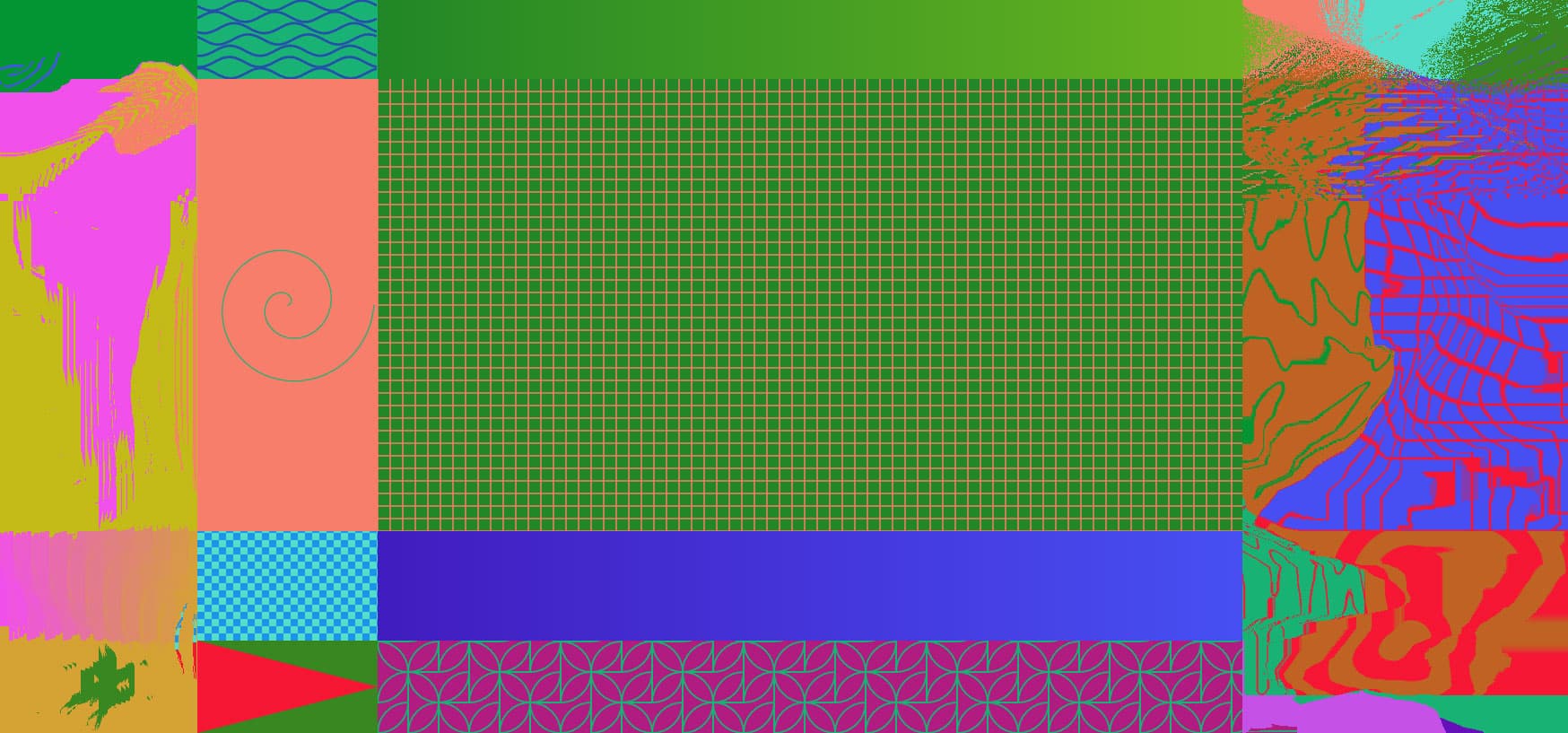
Each edition is different in the way that matters: not superficially, not just a color swap or a slight rotation. The differences are structural, the kind that come from a seed propagating through a system and touching every decision the code makes.
What the works share is a quality of motion held still. The outputs feel like frames pulled from something that was moving, not because they contain animation, but because the forms seem to carry velocity. Lines that suggest trajectories. Shapes that imply the moment before or after this one.
The color is not decorative either. It participates in the same logic as the form, responding to the same seed, arriving through the same process. What you get is not a form with a color applied to it. You get something where the two are inseparable, where changing one would change the other.
Drift #8
666
Six hundred and sixty-six editions is not a small number. It is not a number that creates scarcity in the usual sense. You could mint every edition and the collection would still exist as a coherent thing, because the coherence comes from the code, not from the count.
The choice of this number is not arbitrary. But it is also not a statement. It is closer to a decision about what the collection is for, who it is for, how many people can hold a piece of it without the act of holding changing what it means. There is a version of this collection that could only exist as one edition, a single unique output, a single owner. That version would be a different thing entirely. A different question about what generative art is.
666 editions says: this is not that. This is something that can distribute itself, that can find its way into more hands, that does not require exclusion to have value. Each edition is complete. None of them need the others to be fewer.
What makes each one worth holding is the seed. The seed is unique. The output is unrepeatable. Those facts do not change with the edition count.
This collection is still open. Each edition is already decided by the code, already latent in the system, waiting for someone to introduce a seed and let the drift begin.
Drift #18
That is perhaps the most honest thing about a generative collection: the work is already there. The minting does not create it. It reveals it. You are not commissioning something new. You are finding something that was always possible, always implicit in the system, and making it actual.
Drift keeps drifting. Most of it is still potential.