
April 25, 2026·5 min read
Windows
There's a moment I keep coming back to. Not a painting, not a photograph. A dialog box. Windows 95, the kind that appeared when you tried to close something you hadn't saved. The bevel, the gray, the pixelated icons along the toolbar. At the time I didn't think of it as design. Now I can't think of it as anything else.
ω𝔦𝓃𝔻𝐨𝐰ˢ started from that feeling.
Figma as a Canvas
The tool I chose was Figma, and that choice is not obvious. It's a design tool, a professional one built for product teams shipping software. That tension was part of the point.
When I started working on this collection, I wasn't writing code to generate outputs. I was composing manually, element by element: dialogs, scrollbars, toolbar strips, panels. Each piece is built with Figma's auto layout to control the rhythm of the composition, and a system of components with spacing variants to keep the proportions consistent across the collection. The same component, the same spacing scale, arranged differently each time.
But the material wasn't mine to invent. It was already there, already loaded with thirty years of cultural memory. Every bevel, every inset shadow, every pixel icon carries the weight of an entire era of computing. The moment when personal computers became genuinely personal, when millions of people met a machine for the first time and the machine looked exactly like this.
Figma let me treat those components as a vocabulary. I wasn't designing software. I was painting with the language of software.
A Debt to Leegte
ω𝔦𝓃𝔻𝐨𝐰ˢ is dedicated to Jan Robert Leegte, and that dedication is a sincere one. Leegte's work, scrollbars that go nowhere and windows with nothing inside them, showed me something important: the interface is not neutral. It's not a transparent container for content. It has its own weight, its own form, its own history. When you strip away the content and look at the interface alone, something shifts. It becomes visible in a way it never is when it's doing its job.
That insight lives at the center of this collection. But the grammar is different, specific to Windows 95/98, to the era of CRT monitors and 56k modems, to a version of the digital world that no longer exists but that shaped everyone who grew up near a computer in the nineties.
The Arc of the Collection
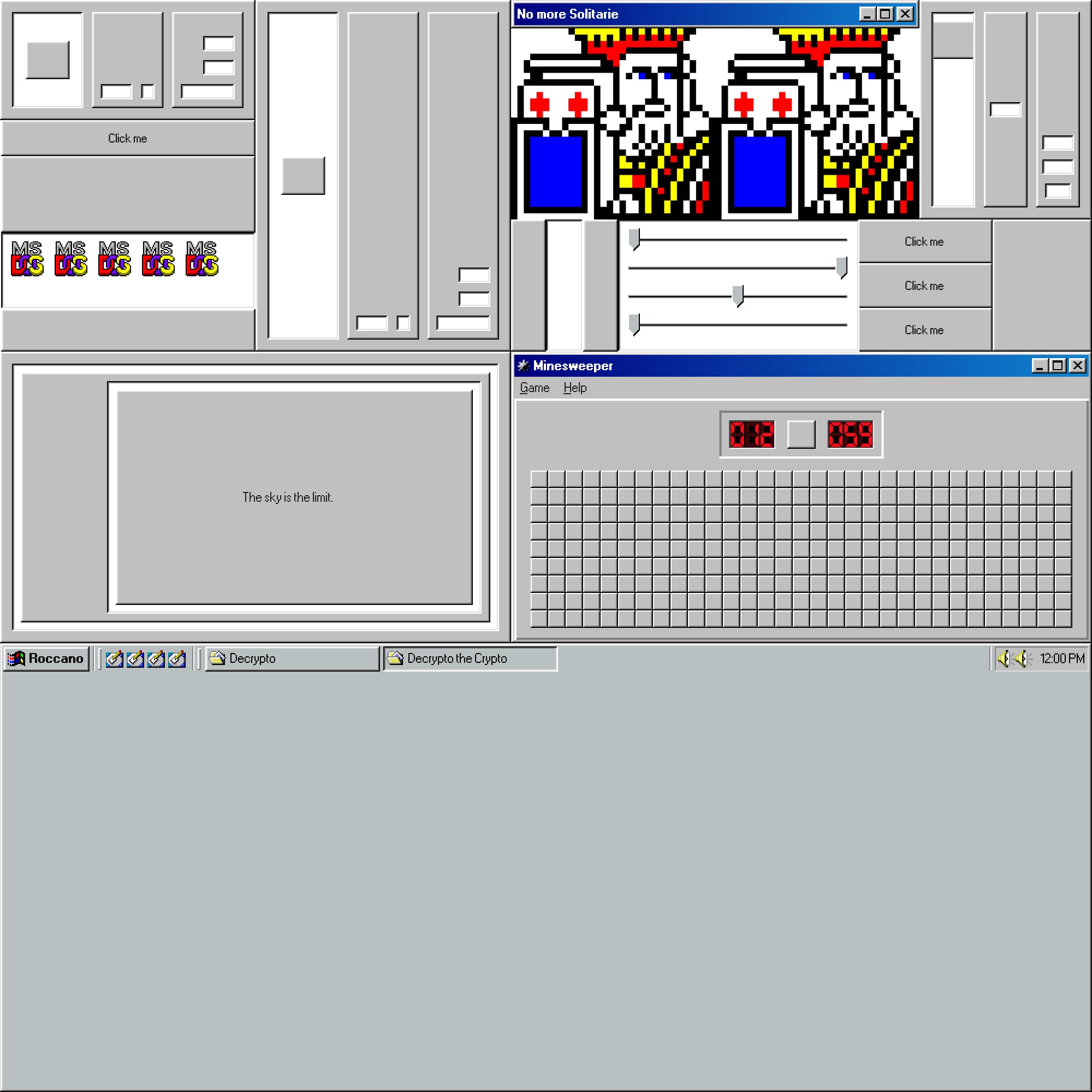
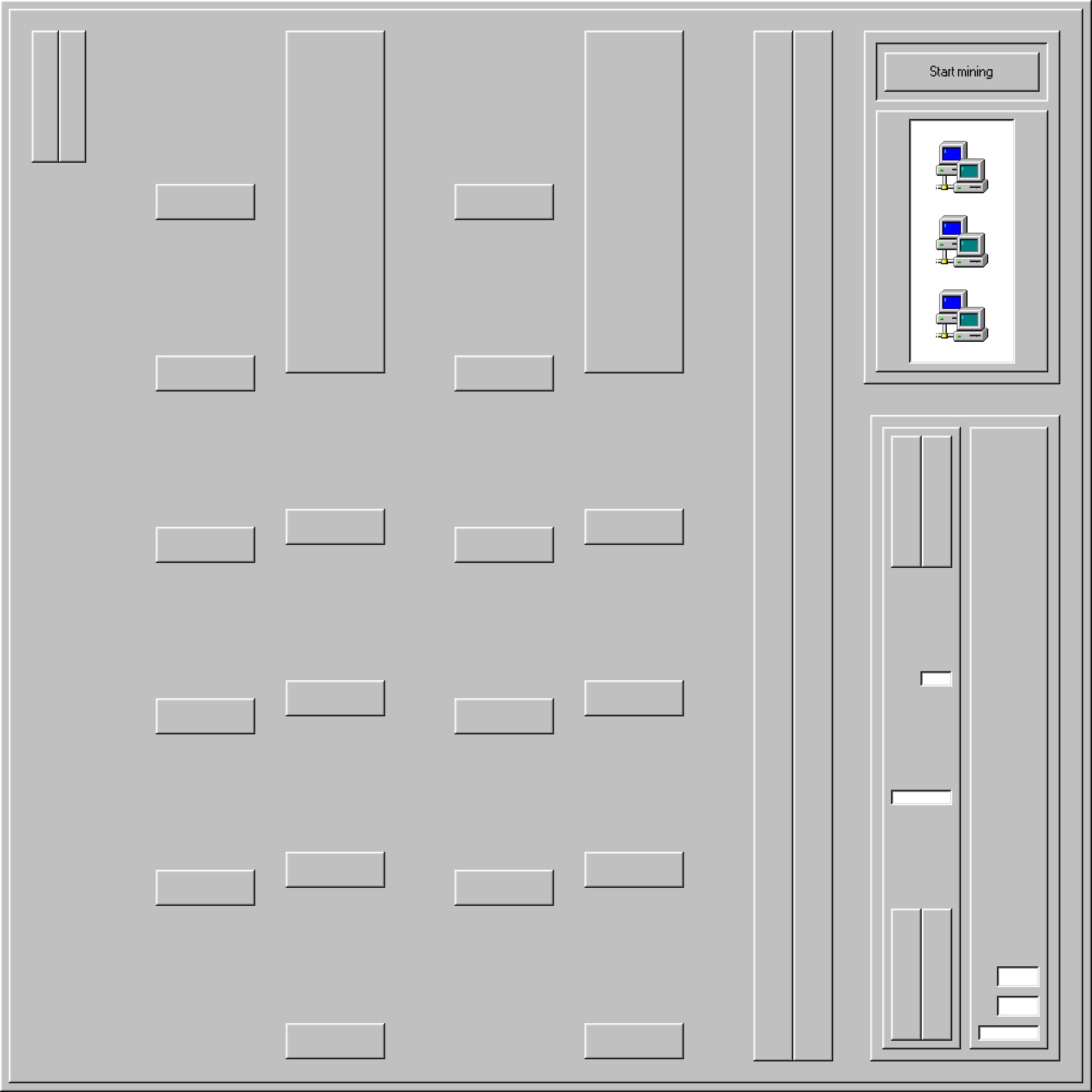
The early works are dense. "No more Solitarie" crowds multiple windows into the frame: a toolbar, a game mid-play, sliders, buttons everywhere. "I'm feeling lucky" builds a sardonic version of a search engine, complete with a browser window labeled "Don't buy Roccano." "Start mining" shows three networked computer icons stacked in a white panel, the title sitting above them like a button you're being asked to press.
There's irony in these titles. Crypto language, gaming references, early internet nostalgia all filtered through the visual language of an OS that predates all of it. The joke is in the collision.
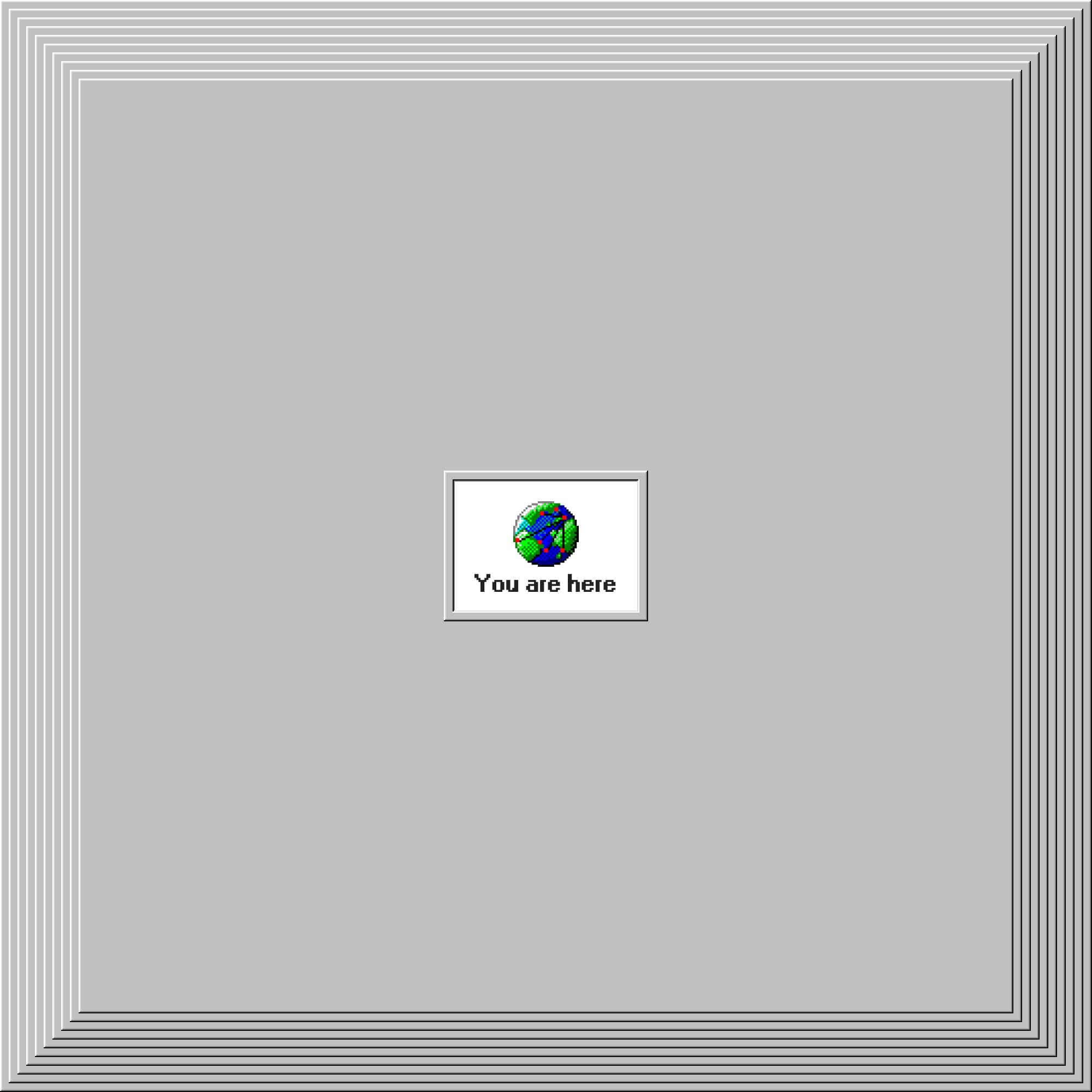
But the collection shifts. As it progresses, the works become quieter. Less content, more form. "You are here" is a single dialog box at the center of a composition of concentric rectangles a pixelated globe inside, the text beneath it almost an apology for its own smallness. "The wall" is pure structure: a grid of beveled tiles with no icons, no text, nothing.
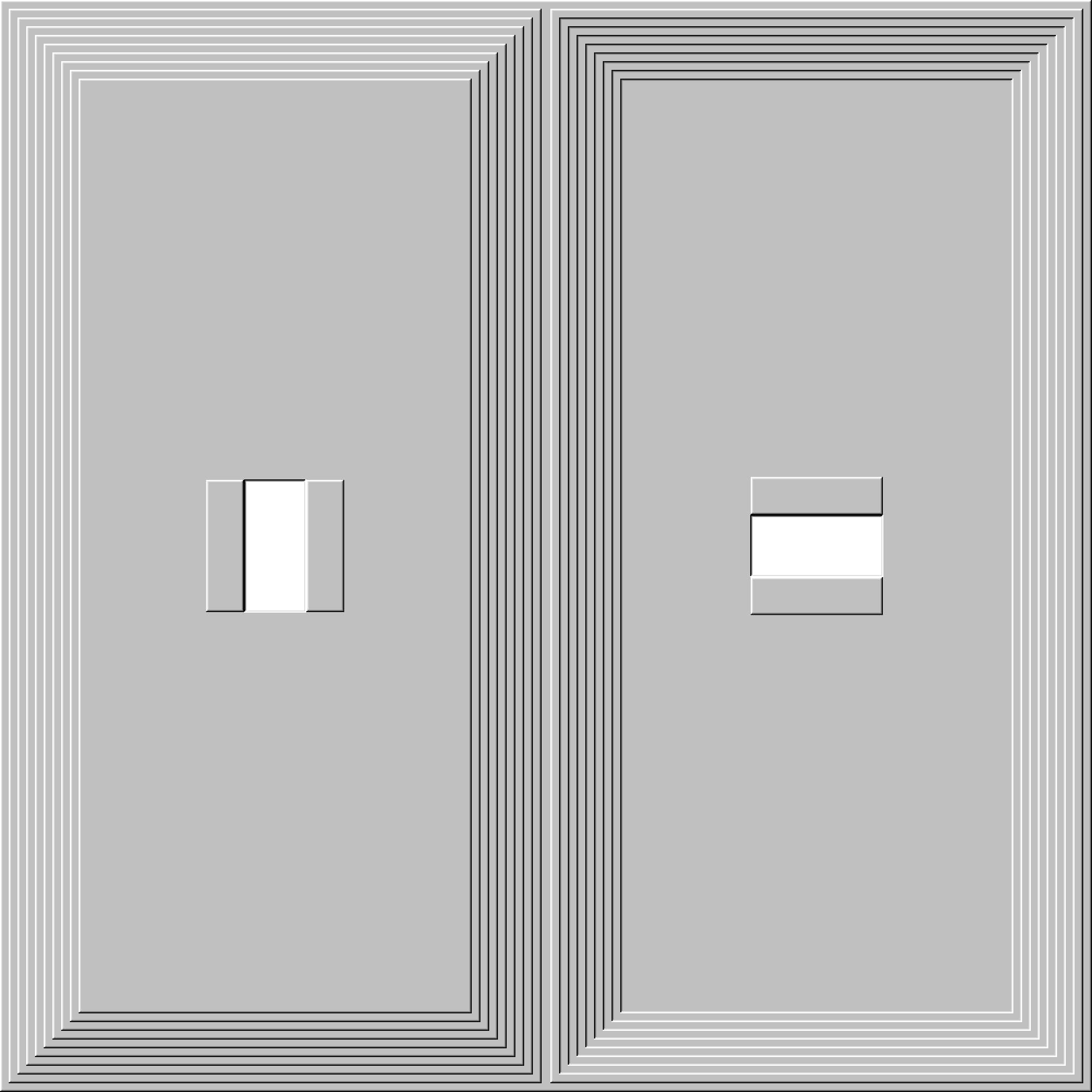
By the last works, "Network" and "Ornaments", the UI elements have become almost architectural. Still gray, still that specific gray, but emptied of any pretense of function.
The Gray
I want to say something about the gray, because it's easy to overlook.
The gray of Windows 95 is not neutral. It's not the gray of a blank canvas or an empty page. It's a particular gray, warm and slightly textured, the color of a monitor warming up. The color of waiting. The color the interface shows you before anything has happened yet.
I chose not to add color to these works. A few of the original pixel icons retain their color, the IE globe, the Solitaire cards, the MS-DOS logo, but that color reads as a fossil, a remnant from another layer of time. Everything else stays gray.
That restraint is not minimalism for its own sake. The gray is the point. It's the moment zero of the digital experience. The interface ready, the content not yet there, the machine waiting for you to tell it what to do.
What Remains
These interfaces are gone now. Windows 11 looks nothing like this. The bevels are flat, the gray replaced by translucency and blur. The pixel icons have been replaced by vector ones, then by photos, then by something closer to illustration.
But the memory of them is still there, sitting somewhere in the nervous system of anyone who grew up with a computer. ω𝔦𝓃𝔻𝐨𝐰ˢ is not about nostalgia for what was better. Those interfaces weren't better. But they were first, and first leaves a mark.
This collection is an attempt to look at that mark to hold the interface still for long enough to actually see it.